Andrew

Vineeto: It is simple – the actual world is already here, has always been and will always be. It becomes apparent when ‘I’/ ‘me’ go temporarily in abeyance. Ergo – ‘I’/ ‘me’, the passionate, imaginary identity needs to disappear/ voluntarily go extinct for the Terra Actualis to become apparent permanently.
However, when you wonder why it ‘you’ don’t disappear/ voluntarily go extinct tomorrow or the day after because it is such a good idea, consider what, of your own free will, you are intending to leave behind – all your hopes and doubts and fears, your hostile feelings as well as your loving and trusting feelings, all of your beliefs and trusted concepts, your grand castles made of imagination, your (borrowed) standards of right and wrong, good and bad and your sense of ‘being’ someone.

Kuba: I remember the first few months of my involvement with actualism I wrote a post about how I found myself in such a weird situation. It was as if ‘my’ whole life ‘I’ had been stuck in this dark and cold cave with monsters all around, and now with actualism I found a way out of the cave where light was shining and where freedom was located.

Hi Kuba,

When ‘Vineeto’ met Richard and, after a short time, especially after her first memorable PCE, determined that this was indeed what ‘she’ had been looking for all ‘her’ life, ‘she’ wanted to learn all ‘she’ could do to achieve ‘her’ goal. It didn’t matter that it was entirely new to human consciousness, that was the thrilling part.

‘She’ had already left main-stream values behind by a large extent when ‘she’ pursued enlightenment in a spiritual commune, at the time something quite uncommon, i.e. crazy, in the West and as such a ‘weird’ pursuit. So, discovering that this spiritual ‘summum bonum’ of human consciousness was not the ultimate after all – that there is perfection and purity right here – ‘she’ came to the decision, after some months of deliberation and gestation, that this was the only worthwhile enterprise to wholeheartedly devote ‘her’ life to.

Once the perspective was clear, the ‘weirdness’ and ‘perversion’ of the human condition were seen as par for the course – after all, an actual freedom is entirely new to human consciousness. Of course, ‘she’ encountered many doubts and fears, but these were also par for the course. Nobody but Richard had succeeded in living it 24 hrs a day, 365 days a year. ‘Vineeto’ was at first surprised that none of ‘her’ previous seeker friends were interested in something infinitely better than enlightenment but not deterred. It was only the beginning of discovering that many more people objected to actualism. Their objections ultimately only confirmed why nobody else had discovered and lived an actual freedom before.

Like you said “I found a way out of the cave where light was shining and where freedom was located”.

Kuba: And ‘I’ was looking at the way out from within the cave and ‘I’ found ‘myself’ perversely addicted to remaining! That dark, cold cave with monsters all around was ‘my’ home, it was where (through a bizarre instinctual passionate logic) ‘safety’ was apparently located.
And it is such a weird scenario, because there are now people outside of that cave, such as yourself, waving a flag, and to top it all off they have also gentrified the way out of the cave so that it is not perilous. And ‘we’ know all this and yet in the cave ‘we’ remain!
The addiction to ‘being’ i.e. suffering is quite something.

Of course, at first from the perspective from within the “cave”, after first glimpses of the actual world, it all looks “weird’ and ‘me’ being “perversely addicted”. That’s why a mere conceptual assessment is not enough – you need the ongoing experiential confirmation that not only is an actual freedom what you want to have but that it is what you want to be. With this clarity the perspective shifts to a down-to-earth action to imitate the actual and make this the number one priority of your life, practically and pragmatically.

Then your evaluation won’t be from the all-or-nothing frame of reference as in “yet in the cave ‘we’ remain” but how much better your life has already become despite not having become actually free yet.

‘Vineeto’ experienced too that ‘she’ often had difficulties giving up this or that feeling or fervently held conviction or moral injunction, that so many others held to be the true reality, inherited from the common-to-all human condition. But that was not the main issue – these obstacles were, one by one, persistently overcome and only increased ‘her’ confidence that the actualism method worked. And as such ‘she’ never concluded that “‘we’ know all this and yet in the cave ‘we’ remain” – there was no “‘we’”, as in everyone else – there was instead the overarching intent to be the pioneer ‘she’ had committed ‘herself’ to be, and determinately pursue ‘her’ destiny.

What is the point in bewailing “the addiction to ‘being’ i.e. suffering” when you can do something practical to diminish this addiction? You already know how ‘to get down to brass tacks’, as they say –

Kuba: I can see now that putting the actualism method into practice is essentially what ‘I’ do in order to put ‘my’ money where ‘my’ mouth is with regards to ‘my’ eventual demise. In that how could ‘I’ possibly agree to ‘my’ extinction if ‘I’ am not even willing to abandon those various outlines of who ‘I’ am. (30 Oct 2025)

And two weeks later –

Kuba: Well I’ll be damned but this thing is working!
The first few days it was a little like I opened Pandoras box, because I finally began to firstly become aware of and then seek to rectify those feelings I have been avoiding, so there was quite a lot to deal with initially, there is still.
But there is already some solid results from this “persistent initialisation”, in that during those times where usually there would be the “ebbs and flows” instead there is the beginnings of a consistent (unconditional) enjoyment and appreciation. (14 Nov 2025)

And four days ago –

Kuba: So yesterday I had another little success, it was precisely the point at which I would usually turn back around. So things have been going quite well and then I experienced this “rudely raw” territory, it’s that experience like the ground beneath me is disappearing and all hangs upon nothing. I notice usually this comes when I remove a “layer of the onion” and proceed towards new territory. (19 Nov 2025)

I singled out those quotes of yours because here you describe applying the actualism method – and the confidence you gain from success. Here is how ‘Vineeto’ described ‘her’ own practice in 2005 –

‘Vineeto’: By neither repressing nor expressing an emotion I have opportunity to ask some investigative questions, either in the situation, if I am not too upset, or some time afterwards when the worst of the storm has passed. My questions go something like this – what brought on the emotional reaction, what is the underlying cause, what is the reoccurring theme, what is the belief behind it, what is it I particularly hold dear that caused my getting upset, what part of my identity feels insulted, threatened, annoyed, etc., what action do I possibly need to take in order to prevent a reoccurring of my upset, and finally, what part of ‘me’ do I need to let go of in order to permanently become free from this particular emotional reaction?
Some emotional reactions I could easily dismiss as being plain silly such as complaints about the weather, about obstacles in the traffic, about people being late, and so on. These situations merely needed a change of attitude, some attentiveness to stop the old habit and then the emotion would not occur again by my sheer determination not to let such trivia bug me. For those issues that needed no further inquiry, nipping any upcoming emotional reaction in the bud was the perfect and only sensible solution.
Other issues took more inquisitiveness, attentiveness, guts and intent to look at the uncomfortable dark side of ‘me’ in order to get to the bottom of reoccurring emotional reactions. For instance, when I first met Peter I had a lot of male-female issues that caused me to get upset which could only be resolved by me finding out the facts of the matter and then letting go of my various idea, opinions, beliefs and feelings around being a woman, i.e. my social identity of being a woman. (Actualism, Vineeto, AF List, No. 77, 20.1.2005)

Only when you fall back into your previous habit of “lofty thoughts, profound feelings and psychic adumbrations” (link) you forget/ discard the successes you had – as if nothing towards more freedom and more naïve joy and appreciation had happened –

Kuba: And ‘we’ know all this and yet in the cave ‘we’ remain!
The addiction to ‘being’ i.e. suffering is quite something.

Yet the moment you remember to appreciate – anything and everything about being alive in this moment, as a pioneer in this brand-new era of human consciousness – look what happens –

Kuba: I am immensely appreciative of what has been done thus far by fellow human beings to arrive at this current situation. Being the next to “step out” is of course the best thing that ‘I’ can do for humankind. (link)

And a day later –

Kuba: What gay abandon is, what naiveté is, is the antithesis to control and insecurity, those are literally 2 opposite directions to travel. The need for control is borne of ‘my’ fundamental insecurity, all of ‘my’ best schemes are backed by anxiety, the very need to have those schemes is fear in motion, it is ‘me’ building ‘my’ glass houses from the ‘safety’ of ‘my’ hiding place.
Whereas naiveté and gay abandon is the undoing of the need for control in the first place. That fundamental insecurity is somehow nowhere to be found when naive, like ‘I’ have just willingly kicked down the walls of ‘my’ hiding place and ‘I’ find delight and freedom as opposed to danger.
That game of ‘danger’ and ‘safety’ that ‘I’ was playing is then seen to be over nothing, an instinctual passionate drama. Meanwhile there is now wonder all around and no danger in sight.
Ha I am reminded of what Richard wrote (paraphrasing) that whilst everyone was huddling around the fire ‘he’ had gone out into the darkness of the night – where apparently monsters were to be found – and ‘he’ discovered it to be a delight! (link)

What a thrilling and utterly rewarding adventure.

Cheers Vineeto

4 Likes

I am going to write about this because it’s so relevant to everything, and I have no answers to it.

I spoke earlier about the resistance to making any effort, as in there was always this feeling that if it is not instantly perfect, I have already failed. It is clearly fear based.

I am experiencing it a lot as I try to get back into music. While noticing I was never really into music in the way I fantasised I would be.

The “instant masterpiece syndrome” seems an appropriate name for this.

Clearly a fear. But also lots of rejection of…trying? That’s the bit I can’t work out. I have an immense pressure in my chest, life long feelings of immense rejection of …something. Which is the weird bit. I am naturally (as in the actual I is, I am clearly in the way) very talented. I have literally no problem immediately producing art, but never masterpieces or anything that takes more than a few minutes. Beyond an initial inspiration and burst of creativity, I completely give up.

I have always hid behind this. But I want to “come out”.

It is an emotional perfectionism.

I reject anything which is less than perfect, in the instant. I am of course, squarely in the crosshairs of my own instantaneous rejection.

I have been, for my whole life criticised and praised simultaneously for being immensely talented and immensely lazy.

I know enough, especially from my last relationship, that this is symptomatic of the type of circumstances that breed personality disorders.

I can’t really say enough how crippling it is.

I also feel guilty that I would make such an excuse !

Stop being so lazy, reach your potential!

The flip side is also there, which is the nihilism of efforts making any difference to the final outcome of anything; pain, fear and death.

It is possible that as I am so immediately familiar with death, having buried my own daughter, my father , my brother and lost another who was never found to be buried, that there is the overwhelming impression that all efforts are “pissing into the wind”.

That doesn’t explain why I felt it at two years old. However, my father had one of those horrible lives you read about, so it’s entirely possible I have psychically been living out his drama my whole life.

1 Like

Creativity and my ineptitude seem interwoven.

The instant reward of creativity, seems very fleeting. Like sugar vs ketones.

It’s a very brief rush, which crashes. I noticed this when I was in a drawing phase in 2017. I had to push myself, if I couldn’t finish a portrait in 30 mins it wasn’t going to get finished.

Music has less to show for it, though I made many more slight efforts, and spent more money on it. It’s slightly more forgiving as an art form. More sustainable.

I also think that there is some recognition of art being divorced from its ancient roots.

I can’t tell if I am romanticising about this, but I held this to be the case when I first found out about my childhood aversion to copying my mother. That there was something about the competition, rather than the pure instant creation, that repulsed me.

Indeed, the 20th century commercial exploitation of music and art in general would be another example of our ancestral birthright being sold from under our feet.

Music and art were far more communal and free range before the advent of recording devices.

I just retired to bed, and had this thought;

In all of this is my ultimate justification for ‘my’ existence, as in the specific way ‘I’ sustain myself.

There’s a thought I haven’t heard before; there is a specific way an individual sustains‘itself’.

I want to sleep, but this is important.

In art , pain is a commodity.

As my entire adult life was dominated artistically by “grunge” specifically Nirvana, and my musical journey started with buddy guy and the blues, I can see the far simpler answer to at least some of this drama; pain is fashionable!

Ok, gotta sleep.:sleeping:

1 Like

Andrew: I am going to write about this because it’s so relevant to everything, and I have no answers to it.
I spoke earlier about the resistance to making any effort, as in there was always this feeling that if it is not instantly perfect, I have already failed. It is clearly fear based.
I am experiencing it a lot as I try to get back into music. While noticing I was never really into music in the way I fantasised I would be.
The “instant masterpiece syndrome” seems an appropriate name for this.
Clearly a fear. But also lots of rejection of…trying? That’s the bit I can’t work out. I have an immense pressure in my chest, life long feelings of immense rejection of …something. Which is the weird bit. I am naturally (as in the actual I is, I am clearly in the way) very talented. I have literally no problem immediately producing art, but never masterpieces or anything that takes more than a few minutes. Beyond an initial inspiration and burst of creativity, I completely give up.
I have always hid behind this. But I want to “come out”. (link)

Hi Andrew,

It’s a good name – “instant masterpiece syndrome” to start the exploration. So far you can see it is based in fear.

Andrew: It is an emotional perfectionism.
I reject anything which is less than perfect, in the instant. I am of course, squarely in the crosshairs of my own instantaneous rejection.
I have been, for my whole life criticised and praised simultaneously for being immensely talented and immensely lazy.
I know enough, especially from my last relationship, that this is symptomatic of the type of circumstances that breed personality disorders.
I can’t really say enough how crippling it is.
I also feel guilty that I would make such an excuse !
Stop being so lazy, reach your potential!
The flip side is also there, which is the nihilism of efforts making any difference to the final outcome of anything; pain, fear and death.
It is possible that as I am so immediately familiar with death, having buried my own daughter, my father , my brother and lost another who was never found to be buried, that there is the overwhelming impression that all efforts are “pissing into the wind”.
That doesn’t explain why I felt it at two years old. However, my father had one of those horrible lives you read about, so it’s entirely possible I have psychically been living out his drama my whole life. (link)

You are discovering the various traps of this “emotional perfectionism” – and notice that almost everything is a feeling reaction to this original demand to be instantly perfect.

Andrew: Creativity and my ineptitude seem interwoven.
The instant reward of creativity, seems very fleeting. Like sugar vs ketones.
It’s a very brief rush, which crashes. I noticed this when I was in a drawing phase in 2017. I had to push myself, if I couldn’t finish a portrait in 30 mins it wasn’t going to get finished.
Music has less to show for it, though I made many more slight efforts, and spent more money on it. It’s slightly more forgiving as an art form. More sustainable.
I also think that there is some recognition of art being divorced from its ancient roots.
I can’t tell if I am romanticising about this, but I held this to be the case when I first found out about my childhood aversion to copying my mother. That there was something about the competition, rather than the pure instant creation, that repulsed me.
Indeed, the 20th century commercial exploitation of music and art in general would be another example of our ancestral birthright being sold from under our feet. Music and art were far more communal and free range before the advent of recording devices. (link)

And because feelings by their very nature go round in circles between fear and guilt, frustration and despair, as they always do, you try some relief in blaming society – not that it works to make you feel better, it only adds to the apparent hopelessness of how you feel.

Andrew: In all of this is my ultimate justification for ‘my’ existence, as in the specific way ‘I’ sustain myself.
There’s a thought I haven’t heard before; there is a specific way an individual sustains ‘itself’. (link)

However, you now put your finger on the nub of the issue – ‘I’/ ‘me’ want to sustain ‘myself’. It highlights what thoroughly destructive ways ‘I’ have in order to “sustain” myself.

Andrew: In art, pain is a commodity.
As my entire adult life was dominated artistically by “grunge” specifically Nirvana, and my musical journey started with buddy guy and the blues, I can see the far simpler answer to at least some of this drama; pain is fashionable! (link)

Not sure what you mean by “grunge” – I found synonyms such as these – “squalor, uncleanliness, scruffiness, sleaziness, muckiness, poverty, dilapidation, dirt, grime, muck” (wordhippo.com). None of them sound like something you would, when looking at it sensibly, want to perpetuate. But apparently this has been the “specific way” for you to “sustain” your ‘self’?

And because you have been doing it to yourself you can also change it all by yourself.

Now that you have a label – “instant masterpiece syndrome” / “emotional perfectionism” and started exploring a lot of the impassioned ramifications of your emotion-backed thoughts, i.e. your beliefs and personal ‘truths’, you can try out something new – get back to feeling good and then apply some method to your thinking to make it more productive and sensible. This is what ‘Vineeto’ reported –

Respondent: While I can see how your meticulous replies can be tiring to others, I more and more see it as a welcome sign of thoroughness.
‘Vineeto’: Good, because thoroughness is all it is. I found that if I wanted to get to the bottom of my problems, I had to be thorough, much more thorough than I had been in my spiritual explorations and much more thorough than I had been in all of the therapy groups I had done. In order to do so, I had to dust off my capacity to think and reflect, something which I had left with my shoes outside the gate [of the Rajneesh Commune]. I then had to learn how to think something through from beginning to end and, when distracted, pick up the thread again, get back to the point and continue on, until I eventually unearthed the facts of the matter in question.
I became aware of the many tactics I employed in order to avoid a thorough investigation particularly when the topic was scary or uncomfortable – feeling tired, wanting to blame, getting confused, feeling numb, playing dumb, forgetting the subject, confusing the issue, seeking a distraction, becoming emotional, and so on. It needs a good deal of persistence and intent to bypass all those ‘self’-created obstacles … but then again I was thoroughly fed up with suffering and thoroughly fed up with being angry. It was clearly time to change. (Actualism, Vineeto, AF List, No. 66b, 6.2.2005).

And here is Richard’s advice ‘she’ put into practice –

Q(1): I have a lot of trouble with thinking – with my thoughts – and what is the work in it, or the effort in it, is that they always have tracks that want to be followed and they are hard to catch … to catch me …
R: Going off on a stray thought?
Q(1): They are keeping me so busy … that I …
R: Yes, but you can actually have fun with this. Have you ever followed a thought right through to its very end?
Q(1): I’m not very good at that.
R: Would you like to? It is fun! You start off with an original thought – you may be silent for a while and a thought pops into your head – and you take particular notice of what that thought is. Put a mental circle around it, or some stars or something, to lock that original thought securely. Then just let your thought wander … you wander with your thoughts … following them through to wherever they go. You will go off into a side branch … and that will branch off into another side branch … and into another and another … and so on. Then you are completely lost. This is the normal way of thinking.
Q(1): Yes, right.
R: Your thoughts meander. Learn to catch yourself meandering; let the meandering go on and after a period of time – three or four minutes – take note. Think to yourself: ‘Wow, where am I at? Where did I start in all this?’ Then you come back to that original thought that you marked and locked in securely. You start with that thought again. Once more, let your thought proceed … this time you will meander off in another direction … and off along another branch … and another … and so on. Once again catch yourself after a while; you may say: ‘Oh, that is interesting, I went off into a side-track there!’ Come back to your original thought that you put a circle around and you will find that it has progressed a little – before you started to meander for the second time you proceeded a short way. So you put a ring around that and – it is so lovely to do this – and then eventually you will be able to follow a thought right through to its very end. And when you do get to the end, some magic can happen. It is so wonderful to do this! You can spend an hour or two doing this; following a thought, meandering, coming back, wandering again, coming back … and so forth.
We can do this in a talk, a discussion. We start this particular conversation that we are having now, and what I do is I mentally note how it started. Everybody can have an input and we can talk and talk and explore and discover – we meander. After a while you will find me saying something like: ‘To get back to what we were talking about at the beginning …’ and that brings everybody back to the original topic. Then off we go again, to wander and ramble again – and I take note of where we progressed to before we digressed for the second time …
Q(1): But the interesting part is that I … not the meandering, but the earlier I catch the meandering and go back to the original … but … oh, I see; the important thing is that I follow the trunk.
R: Right to the very end. It is a lovely thing to do – it is delicious – because you get to know the workings of your own mind. This is your brain in action.
Q(1): You learn to know yourself. But one of the first things I do is remember the things I need to do in the day.
R: Simple. Write them down on a piece of paper and get them out of your head.
Q(1): But what I do works; I make a note of it in my head.
R: However, do you find yourself going back over it again and again? That you work through the list … you wander off … you come back to the beginning of the list and you work through it again. Especially when you first wake up in the morning. Do you find this? That you re-evaluate the list?
Q(1): That’s true.
R: Do you see that you do not need to? Catch yourself doing it: ‘Why am I going through it again. I already know this.’ This is also fun. To watch how your thought process works. (Audio-Taped Dialogues, Silly or Sensible).

Discover the fun in getting to know the workings of your own mind.

Cheers Vineeto

2 Likes

I appreciate your time and replies Vineeto!

I have read the “circle a thought “ and then meander discussion before. It is lovely to be living it somewhat. Last night it was important to get out of bed and make more notes, as it’s the usual way to forget everything soon enough, and no amount of “circling or stars” will cause me to remember.

FYI, “grunge” was a style of punk rock music which rose to global popularity in the early 1990s, led by a band called Nirvana. It was iconoclastic, as far as the popular music scene was concerned, and defined the generation which was beginning to be called “gen X”, the children of the post war “baby boomers”.

I don’t know if previous generations had names for each other. It’s pretty eye opening to see the generations changing so rapidly with the advent of technology!

Which, ironically is what my mind is consumed with these days. Which piece of technology will I purchase to make music! Haha :stuck_out_tongue_winking_eye: so very not musical!

There is decades of this drama in me. This “instant masterpiece conundrum “ playing out. I feel myself passionately in ‘here’ somewhere. Each time I start to think through the objective of what it is I want to musically achieve, the more money that is going to cost!

Time to get some sticks and an animal skin drum. The modern world is determined I go back to being broke, just to make ‘music’.

It is very much a”put your money where your mouth is” scenario! Whilst the music itself costs nothing and it’s my own belonging to society which causes me to crave the expensive and unnecessary trappings of modern music production.

I have guitars sitting in front of me. Why do I crave recording myself? Well, some of it isn’t egotistical and vainglorious, but rather missing the feeling of creating music with others. I used to be in bands, and had quite a few experiences of transcending myself when playing music. Once in front of around 3000 people! Other times in church, a few times in pubs.

Hmm. I am enjoying this exploration.

Cheers

Andrew

1 Like

There was the realisation today that a certain style I music I like could serve the purpose of uniting this desire for perfection and also the learning to put in effort; a optimistic style which had a ‘adventure’ in the sound.

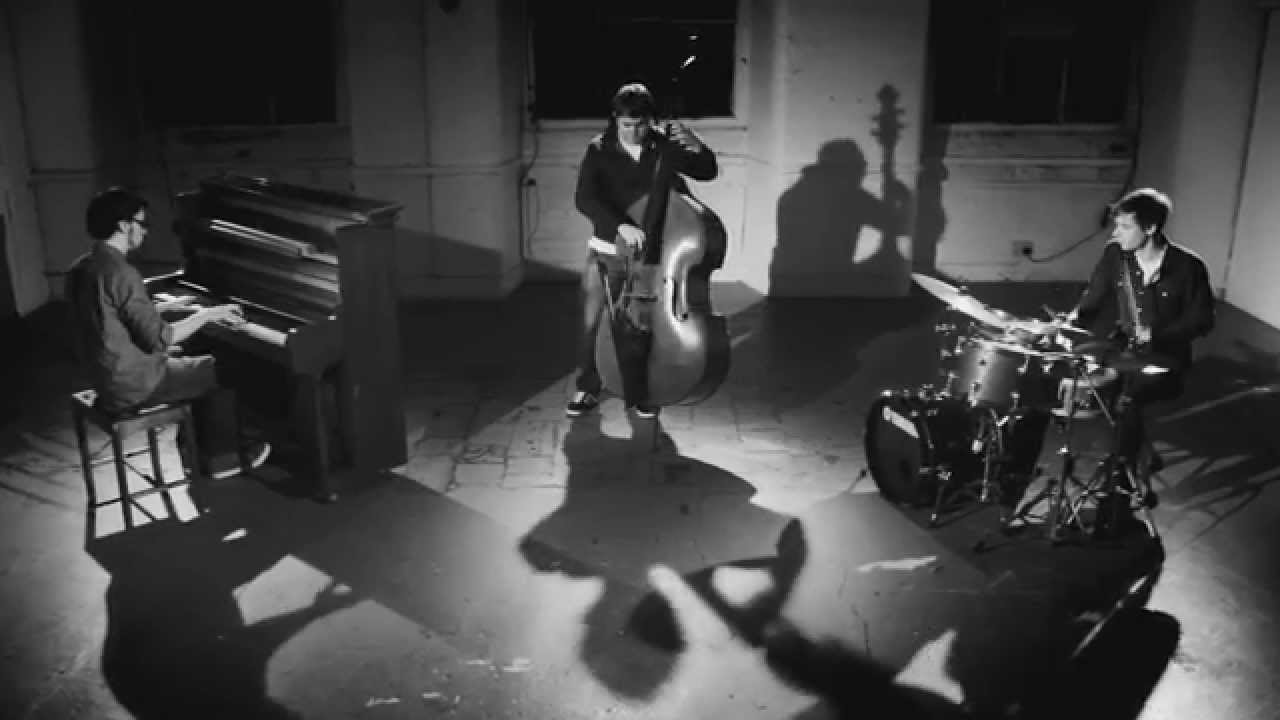
I have maybe better examples, but this is one of my favourites over the last decade;

The more I explore what I want to buy, the more it is all about having the best possible equipment which is the closest to acoustic instruments I grew up listening to.

Pure acoustic music.

1 Like

The idea occurred to me that this fear, the “immediate perfection complex” has to be something that a 2 year old would feel. None of the elaborate stories about art, or anything else can be the source.

If indeed it has anything to do with getting things “perfect” at all!

It could be anything, but it has to be something formed at and before 2 years old.

Potentially some sort of early false self imagination. That in the environment I was, all was scary?

It’s encouraging to simplify it all like this.

Andrew: I appreciate your time and replies Vineeto!
I have read the “circle a thought” and then meander discussion before. It is lovely to be living it somewhat. Last night it was important to get out of bed and make more notes, as it’s the usual way to forget everything soon enough, and no amount of “circling or stars” will cause me to remember.
FYI, “grunge” was a style of punk rock music which rose to global popularity in the early 1990s, led by a band called Nirvana. It was iconoclastic, as far as the popular music scene was concerned, and defined the generation which was beginning to be called “gen X”, the children of the post war “baby boomers”.
I don’t know if previous generations had names for each other. It’s pretty eye opening to see the generations changing so rapidly with the advent of technology!

Hi Andrew,

You are very welcome. The generations before the baby boomers were ‘the great war generation’, the ‘between the wars generation’ and the ‘2nd world war generation’, followed by a generation instinctive-naturally replenishing the enormous population which was killed in the 2nd world war. (link)

Thank you for explaining what “grunge” stands for. In combination with the music video you posted (GoGo Penguin) (link) I am forming the impression that “gen X” was widely influenced by modern and post-modern buddhistic teachings and practices (such as taught at DhO), and the video you said was “one of my favourites over the last decade” had a somewhat soothing trance-like quality – a single short theme branching out in slight variations and returning to the original theme. I couldn’t help but be reminded of Gotama the Buddha’s Four Noble Truths where ‘Nirvana’ is the name of the Promised Land. It’s worth repeating the core of what seems to have helped shape a whole generation including its art-forms, as a result of the search of the previous generation (especially the first ‘Noble Truth’) –

  1. Life is fundamentally disappointment and suffering;
  2. suffering is a result of one’s desires for pleasure, power, and continued existence;
  3. in order to stop disappointment and suffering one must stop desiring; and
  4. the way to stop desiring and thus suffering is the Noble Eightfold Path – right views, right intention, right speech, right action, right livelihood, right effort, right awareness, and right concentration. Encyclopaedia Britannica

Whatever preference you pick to keep or throw out, it’s certainly time to recognize that this wide-spread religious ‘solution’ has not worked, don’t you think?

Andrew: Which, ironically is what my mind is consumed with these days. Which piece of technology will I purchase to make music! Haha, so very not musical!
There is decades of this drama in me. This “instant masterpiece conundrum” playing out. I feel myself passionately in ‘here’ somewhere. Each time I start to think through the objective of what it is I want to musically achieve, the more money that is going to cost!
Time to get some sticks and an animal skin drum. The modern world is determined I go back to being broke, just to make ‘music’.
It is very much a “put your money where your mouth is” scenario! Whilst the music itself costs nothing and it’s my own belonging to society which causes me to crave the expensive and unnecessary trappings of modern music production.
I have guitars sitting in front of me. Why do I crave recording myself? Well, some of it isn’t egotistical and vainglorious, but rather missing the feeling of creating music with others. I used to be in bands, and had quite a few experiences of transcending myself when playing music. Once in front of around 3000 people! Other times in church, a few times in pubs.

Personally I think you can do a lot better than your favourite band – some fun, some liveliness, an expression of the exuberance and splendour, of the magnificence of the universe and this moment of being alive.

For this exuberance and joie de vivre to be set free, however, requires remembering your recent realisation regarding the nub of the issue – “‘I’/ ‘me’ want to sustain ‘myself’” and to translate it into practice.

The more you act on this realisation, i.e. actively diminish yourself and are consequently more able to enjoy and appreciate being here, the more the quality of your creativity will increasingly express how you experience life. Diminishing your bank account alone by buying equipment won’t be enough.

Andrew: Hmm. I am enjoying this exploration. (link)

Excellent, keep going. There is so much more to come.

Andrew: The idea occurred to me that this fear, the “immediate perfection complex” has to be something that a 2 year old would feel. None of the elaborate stories about art, or anything else can be the source.
If indeed it has anything to do with getting things “perfect” at all!
It could be anything, but it has to be something formed at and before 2 years old.
Potentially some sort of early false self imagination. That in the environment I was, all was scary?
It’s encouraging to simplify it all like this. (link)

I understand that you are curious to find out when it was and what it was which stifled you, but Richard describing his own dealing with ‘his’ childhood hurts may give you some immediate release from it all – if “‘I’/ ‘me’” who wants “to sustain ‘myself’” can give permission to have them released, that is –

Richard: Speaking personally, the feeling-being inhabiting this flesh-and-blood body all those years ago instantaneously rid ‘himself’ of the bulk of those school-age hurts and slights—whilst sitting out in the sunshine one fine morning, putting pencil to paper in order to finally record those dastardly events for posterity, as per a long-held and cherished ambition to do so at length—via seeing-in-a-flash that, as it was simply not possible to ever physically be a child again (and thus juvenilely susceptible to not only those bully-boys and feisty-femmes but any enabling teachers and principals as well), there was absolutely no need whatsoever to continue nursing them as a carryover grudge. It soon became increasingly apparent, thereafter, how those childhood hurts had been vital to the maintenance of the righteous indignation which fuelled ‘his’ plaints of injustice (a.k.a. ‘unfairness’) and, thus, ‘his’ mission to bring justice (a.k.a. ‘fairness’) to the world.
Also, with the dissolution of those childhood hurts the (deeply felt) need for any aggressive tit-for-tat modus vivendi also vanishes—leaving one free to treat all others as fellow human beings rather than as adversaries to gain dominion over. [emphasis added]. (Richard, Selected Correspondence, Aggression, 21 January 2016).

Cheers Vineeto

3 Likes

Thanks Vineeto.

Your insights are truly remarkable.

I enjoy re-reading the writing of Richard , especially as I have read it before but not had any connection with them; having them stand out to me like this is lovely.

Your links between’my” generation and Buddhism, repetitive musical motifs, focusing on suffering, are remarkable. They are like “water to a fish” to me; I was tangentially aware, but having it pointed out? Wow.

I have been wondering how my mother remained so insulated from self reflection. Christianity is a hell of a drug, it would seem.

I am tempted to see something of the overall “tone” of rebellion in my feelings towards the moments I remember.

In all of this, it’s very obvious I don’t “know” as you pointed out a few posts back. These ideas are all interesting, I “think” some are close.

One of the obvious things from this whole interest in buying musical equipment is how I desire it, but reject it at the same time! I would have no such qualms about buying a car. There is something socially acceptable about even going into a lot of debt to own a car, but even say, $6000 spent of a few high quality musical goods is bringing out all sorts of feelings towards the world and myself.

I watched something the other day about how the world loves art, but generally hates artists. It seemed self serving in that the person was an artist (strangely I feel this revulsion in calling them an artist!).

The particular thing my mother was drawing when I was two years old, was a stylised “dog” character with a bow tie. A cartoon that many would memorise and replicate. When i could not replicate it, (obviously I am two years old!) I refused to even pick up a pencil for a long time. My mother recounts she deliberately did not draw at all for months before I would touch a pencil again.

I am a left handed person for what that is worth, and a “creative elitism” feeling has been very prominent lately. Again, another interesting tangent, which does have some backing in the observations of others as to how left handedness is related to various exceptional talents, but also desire for power, and recklessness. Also apparently prone to accidents, which has proven to be true over the decades. I have nearly been killed at least a dozen times. That might just be a normal male “thing” though.

I feel both proud and embarrassed about this whole thing. So utterly “bourgeoisie “ to be even discussing some “slight” from an otherwise first world upbringing. Still, I am glad that at least something is happening which is of a different type to the past decade plus, which was marked with lots of thinking and posting, and plenty of drama.

I suppose what you said once holds true; once we start on this path we are going to have the drama we have to have!

Cheers

Andrew

1 Like

Andrew: Thanks Vineeto.
Your insights are truly remarkable.
I enjoy re-reading the writing of Richard, especially as I have read it before but not had any connection with them; having them stand out to me like this is lovely.

Hi Andrew,

That’s good to hear. There is a plethora of information how to feel good, feel better and feel excellent on the Actual Freedom website – I won’t be around forever to present you with appropriate quotes. But I am pleased to read they are of use to you.

Andrew: Your links between “my” generation and Buddhism, repetitive musical motifs, focusing on suffering, are remarkable. They are like “water to a fish” to me; I was tangentially aware, but having it pointed out? Wow.

Indeed you have expressed the theme of “life is fundamentally disappointment and suffering” often enough to see the connection but when you introduced the video as “one of my favourites over the last decade” I became obvious. Now that you know that it’s religion, albeit Eastern religion, you have inadvertently practiced, are you ready to wipe the slate clean like you did with guilt a couple of weeks ago?

Andrew: I have been wondering how my mother remained so insulated from self-reflection. Christianity is a hell of a drug, it would seem.
I am tempted to see something of the overall “tone” of rebellion in my feelings towards the moments I remember.
In all of this, it’s very obvious I don’t “know” as you pointed out a few posts back. These ideas are all interesting, I “think” some are close.

Did you fully understand when Richard said –

Richard: It soon became increasingly apparent, thereafter, how those childhood hurts had been vital to the maintenance of the righteous indignation which fuelled ‘his’ plaints of injustice (a.k.a. ‘unfairness’) and, thus, ‘his’ mission to bring justice (a.k.a. ‘fairness’) to the world. (Richard, Selected Correspondence, Aggression, 21 Jan 2016).

Now, that you described what you remember your mother did to instil this ‘instant perfectionism’ in you – did that make any difference in your attitude and behaviour towards succeeding? Or was it just a realisation to be filed away for telling a good story some time? You said –

Andrew: The particular thing my mother was drawing when I was two years old, was a stylised “dog” character with a bow tie. A cartoon that many would memorise and replicate. When I could not replicate it, (obviously I am two years old!) I refused to even pick up a pencil for a long time. My mother recounts she deliberately did not draw at all for months before I would touch a pencil again.

To paint a cartoon might not require much skill. Do you still believe that this is the standard of quality you have to/ want to follow, with the prerogative to do it instantly? Trusting authority can be a crippling belief/ attitude but you are no longer two years old, and will never be again. Unless you deliberately and joyfully let go of your childhood hurts, and with it the parent-child authority, nothing will change in your life.

Here is how Richard approached producing art –

Richard: For what it is worth: whenever I came across somebody who had already accomplished what I wanted to achieve I unabashedly set out emulate them – avidly reading every word they wrote/listening intently to what they had to say (colloquially known as ‘picking their brains’) plus being generally appreciative that they be willing to pass on experience and information – inasmuch at the beginning of the path which led to me becoming a practising artist in my own right, for instance, in the area of the fine arts I slavishly copied, imitated meticulously, acquiring the necessary skills along the way, until the moment came where everything pertaining to that aspiration had became second-nature to me.
Then I let go of the controls … and it all happened of its own accord. (Richard, AF List, No. 30, 7 Jul 2005).

That means unless you learn the skill of the craft first, meticulously and patiently, you cannot have “it all happened of its own accord” and art will never eventuate. No amount of expensive equipment can make up for lack in skill and patient training.

Andrew: One of the obvious things from this whole interest in buying musical equipment is how I desire it, but reject it at the same time! I would have no such qualms about buying a car. There is something socially acceptable about even going into a lot of debt to own a car, but even say, $6000 spent of a few high quality musical goods is bringing out all sorts of feelings towards the world and myself. (…)

I can only suggest to keep it simple – start with your own objections to feeling good.

Andrew: I feel both proud and embarrassed about this whole thing. So utterly “bourgeoisie” to be even discussing some “slight” from an otherwise first world upbringing. Still, I am glad that at least something is happening which is of a different type to the past decade plus, which was marked with lots of thinking and posting, and plenty of drama.
I suppose what you said once holds true; once we start on this path we are going to have the drama we have to have! (link)

Well, the emotional drama only diminishes when you get tired of being a willing participant/ instigator. Underneath all the attraction to drama and victimhood there is something called common sense – when you give it room to operate …

Cheers Vineeto

Thanks Vineeto,

I certainly did reflect on many things you wrote about, and took them with me through the day as I looked at how this made ‘me’ think and feel in ways which are always familiar to that same drama. ‘Perfectionism’ like the ‘intellectualism’ I was looking at toward the beginning of the year, has scant to do with what is “on the box”.

As you posted about Richard perfecting his skills and mastering his art, it was not through ‘perfectionism’, but rather obsessive and continuous practice and imitation.

One could say the same of someone honing their intellectual ability. It’s not in taking on the airs of ‘intellectualism’ that creates superior intellectual ability.

I had an enjoyable enough day, and an even more enjoyable evening. I went to the musical instrument shop and spent a couple of hours playing various instruments and inspecting others. I was happy to not be in the frame of mind that I was there on a mission other than to continue exploring what it is I feel about all of this.

I noticed certain anxiety rise when things seemed that it wasn’t going to work out, and simply accepted that is a fact. I had a lovely time playing a keyboard which I had walk past many times. A rather inexpensive keyboard, which was very pleasing in the sounds to made. I determined to leave it at that, and simply note the enjoyment. There are plenty of keyboards in the world, and the fact I enjoyed it was as much about me being open to enjoying myself, and let go of the drama around the dawning fact that none of the equipment on this particular visit was going to be purchased.

That was in itself due to the unfolding of this particular exploration. The mix of feelings which normally cascade from one to another, from hope, to frustration, to despair and aversion, where all still born as the bigger issue was, “am I enjoying myself?” “Does that actually do the thing, and if it doesn’t, why push into it?”

Indeed, a big consideration in all of this and for months has been upping my skill levels, rather than any “end goal “ of songs or musical pieces.

I have been deliberately noticing this dichotomy of how I would swing between the goal of sounding good in some imaginary end musical product, and actually enjoying MAKING the music itself.

This has been the guiding light. The outcome must be from the enjoyment of making it. If it’s not enjoyable, then I really do have enough imperative tasks at work to “grind” through. :joy:

Thanks

Andrew

1 Like

Hello again,

Something more needs to be explored here. I was tempted to sweep this one under the proverbial carpet, but the cost would be too great. As you rightly point out, you will not be around forever (although the same could be said for me), so why waste an opportunity to look at it?

As soon as I am challenged, as there were challenges in your post to me, a feeling of anger arises.

To answer one of your questions, the one about whether I fully understood Richard releasing the childhood hurts would not lead anywhere, especially as he would never be back there anyway, the answer is “No, I don’t fully understand “.

However, the annoyance at being questioned/challenged, and exposing this anger, and thus childhood slight!

Very cool!

It’s one and the same feeling.

More to come.

Funny happening last Friday at the work Christmas party.

I will skip the details, but everyone was very drunk and I found myself face to face with the bosses wife, and the wife of the project manager. Who, are best friends.

I can’t for the life of me remember how the conversation started, but they were intent on telling me off, for something. I, in my drunk state, was actually pretty happy to listen, as it’s a rare thing to hear female complaints. It was specifically something about the proverbial “man/woman” war of the sexes which was being discussed. I say specifically, as the category of discussion is a definite thing, the exact points where not clear to anyone involved!

No matter that I was telling them things like “this is really precious to me, to be listening to what you are saying “ the attackers kept coming! The crescendo was “have you learnt anything from what we are saying?”

Keeping in mind we are all very very drunk, I knew they hadn’t actually said anything as it was all an attack, and that I also couldn’t remember anything as I was very drunk, but the take away was; no matter how much I completely submitted and listened, indeed the more I did exactly that, the more intense the attack became!

This is really going to be a fun investigation. Maybe the most fun of all!

1 Like

It’s easy to punch down.

Interesting assessment. Especially that your evaluation starts with “trust”.

It’s intrinsically the experience of betrayal of trust, and it’s decent into fear, anger and abandonment and powerlessness which comes to mind.

I completely agree that any restoration of trust , which obviously happened in me, was a grave mistake.

The anciently old drama, experienced from the womb, to the breast, to the teet of “society “ ‘itself’. Haha

Yeah, that indeed does sound like I was never going to get anywhere with any trust going on.

Indeed, it’s been that fear based, “trust” that my mother has unwittingly installed in me.

This explains a lot. Hmm.

It explains why I am writing this from her spare room. It explains why this was also the room my late brother lived in, and also explains why I am a scant 5 meters from where he overdosed and died. It tangentially explains why I am the one she called, not her other remaining son;, to come and break down the toilet door and perform CPR on his already purple and increasingly cold body.

Yeah, it’s not a small thing this whole human condition. And a few “childhood hurts” may be something to look at. Certainly can’t hurt any further! :joy::joy::joy:

To your point, and by extension Richard’s point, childhood hurts are often not even what one experienced in one’s own life.

As impossible that it is that I would relive my own childhood and whatever “hurts” from the playground, it’s doubly impossible to relive my father or mother’s timelines.

Funnily enough, despite having lived my life with crooked front teeth from school yard fights, the idea of any of the bullying, or fighting being a “hurt” is so strange to me. I was kicked, and punched a few times, but for all my melodrama, I have never counted any of that as being a “hurt”.

In fact, that was the overarching theme of my life; I have never been allowed to be “hurt”.

No matter what happens, no matter who dies, or what is lost, it’s up to me to be strong.

It’s why I think I am such a “crybaby” on line. Haha. I don’t get to complain anywhere else. Ever.

1 Like

It seems sensible to keep exploring this “in the round”!

So, faith, hope, and trust are central to Christianity. So much so that if all the nominal Christians lined up, it would take all the Muslims, all the Buddhists, and a good chunk of the Hindus to stand toe to toe with them all.

I am glad to be looking at this! Trust and Hope are such a huge part of ‘who’ I am!

1 Like