Global warming/climate change

This doesn’t change anything - sure it includes some infrared light which may be absorbed and radiated in both directions while the light is entering the atmosphere. I’m talking exclusively about the broad spectrum of light that is able to enter the atmosphere as it is sent from the Sun to the Earth, but which is then converted into infrared when it is absorbed and radiated by the Earth. This means that on its return journey back to space, the energy that was once UV/visible is now infrared, and thus it can be absorbed and radiated back by the atmosphere.

So by your math it would look like this (sun radiation is comprised of 50% infrared/50% visible and UV, and 30% of UV/visible reflected before entering atmosphere):

First, let’s model the actual IR absorption rate of our atmosphere which is around 70% with 30% direct passthrough.

  1. Sun
  2. Radiation into space
  3. Atmosphere
  4. Radiation to Earth
  5. Earth

Sun Sends:
(100 = 50 IR + 50 UV/Visible) 0 0 0 0

Atmosphere absorbs infrared/UV is reflected:
100 (15 UV/visible reflected back) (35 IR) 0 (15 IR + 35 UV/Visible)

Atmosphere radiates Infrared:
100 (17.5 IR) 0 (17.5 IR) (15 IR + 35 UV/visible)

End state of initial absorption:
100 0 0 0 (32.5 IR + 35 UV/visible)

Essentially 100% of the UV/visible is converted to infrared and radiated by Earth back into the atmosphere which looks like this:

Earth converts all energy to IR and radiates to atmosphere which absorbs 70% and 30 % exits to space:
100 (20.25 IR) (47.25 IR) 0 0

Radiates outward and back to Earth:
100 ~23.6 0 ~23.6 0
100 0 0 0 ~23.6

Now, running the same example but increasing to 80% atmospheric absorption of infrared with 20% passthrough:

(100 = 50 IR + 50 UV/Visible) 0 0 0 0

Atmosphere absorbs infrared/UV is reflected:
100 (15 UV/visible reflected back) (40 IR) 0 (10 IR + 35 UV/Visible)

Atmosphere radiates Infrared:
100 (20 IR) 0 (20 IR) (10 IR + 35 UV/visible)

End state of initial absorption:
100 0 0 0 (30 IR + 35 UV/visible)

Earth converts all energy to IR and radiates to atmosphere which absorbs 80% and 20% exits to space:
100 (13IR) (52 IR) 0 0

Radiates outward and back to Earth:
100 26 0 26 0
100 0 0 0 26

As you can see, because there is additional infrared energy being radiated out from Earth after the UV/visible is converted compared to the initial amount of IR coming in, this leads to increased atmospheric radiation as the atmospheric IR absorption increases. The impact of higher absorption is not equal in both directions due to this variable, which results in more heat being passed to Earth as more IR is retained.

Thanks Scout!

So, if all the energy from the sun is being converted to IR, then why can we see the earth from the moon? For us to see it, it must reflect visible light.

Edit: the following is all extemporaneous, i.e. straight from the top of my dome…:sweat_smile:

Indeed, each surface of the planet reflects differently. Considering that 70% of it’s surface is water, that’s the main consideration.

All light which hits the water will penetrate depending on its spectrum. The deeper on goes, the darker it gets, to somewhere around 80m no light is reaching at all.

The water doesn’t radiate all the energy back into the sky. Mainly just some of the visible spectrum, and some of the heat. The rest of the heat is contained in the water. Water is extremely good at containing heat energy.

So, the premise that the surface of the earth, which is primarily water, and is converting light energy into primarily IR heat, and radiating that back into the atmosphere, doesn’t match our first hand experience, let alone casual explanation. Edit: for water…

However, the mechanism you mentioned, is far more applicable to the land. Indeed, being in Perth Western Australia, the ground gets very hot. (Thankfully, summer is ending here, and one of my favourite “inbetween seasons” is arriving).

So, the land is behaving something like your description. Converting energy into more of the IR spectrum.

However, to whatever extent that is true, it still doesn’t explain the “one way valve” idea of “radiative forcing".

Indeed, without so much as a 5 second search to provide an image of the absorption spectrum of CO2, it shows an “IR window” allowing IR to pass straight from space, to the ground.

By what mechanism, presuming such a window exist, does it selectively decide to only reflect IR from earth? Especially considering IR (and light in general) is indeed passing through the atmosphere at many different angles, in 3 dimensions!

It’s a very magical atmosphere being proposed, and most importantly to the "CO2 emissions are the key to saving the world " lobby, that it can discriminate between the source of the IR.

Remember, this is their own data and images. Not cherry picked, a literal 5 second search.

I appreciate the maths by the way. I spent countless hours since the last discussion dreaming up how I could model the “starting point” temperature of the earth.

Easily conceived, not so each to achieve with my motivation levels around the topic. It would be an extensive project, and it I am not sure who the audience would be for it.

Anyway, let me reset and stop diving in the deep end here.

I will reread your math presentation and see if we can keep it 1D.

Ok, running this mentally, I will need a decision from you, “game rules” if you will;

I understand so far that in the math you presented the sun is now a source of IR and we are setting the vale at 50%. All good.

We are going to admit energy from the sun through the system with a 70 absorbed 30% pass through/split on the IR.

Ok, got it

The visible we are treating the opposite and different, with a 30 *reflection * and a 70 pass through.

This is where I am stuck. Did the atmosphere just become magical? Made out of something different than the planet?

Because, the last bit, where the planet has a different set of rules is confounding my mental modelling here

It’s primarily water and materials , the same as the atmosphere?

Why are the atoms in the atmosphere reflecting 30% and passing through 70% of the visible light, but the atoms of the earth aren’t doing that?

Considering that the primary “greenhouse gas” is water vapour, and the primary earth material is water (liquid). The same molecule is doing something different?

It seems that I need a decision on the rules here, because we are introducing different rules for each part of the equation, when the original only had one 4 rules.

  1. Energy comes in,

  2. middle number absorbs a percentage

  3. all the energy of the middle number is emitted equally

  4. the last number will absorb and emit 100% of that energy back.

We now have an equation where the middle number and last number have to behave differently.

We are creating magical numbers. Which I am not against, but if those are the rules, I can play!

I will admit freely, I am quite excited about this magic we are discussing.


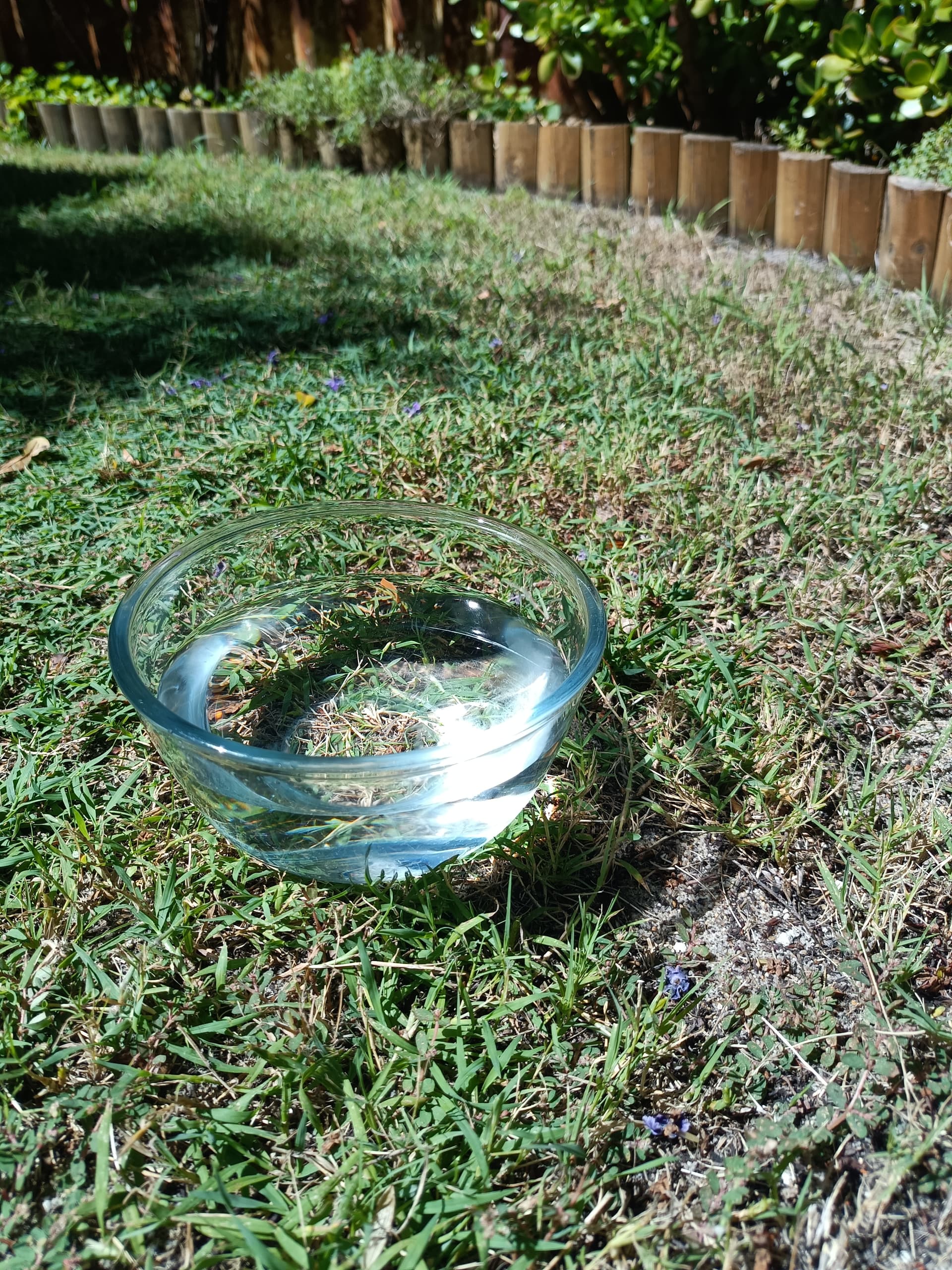
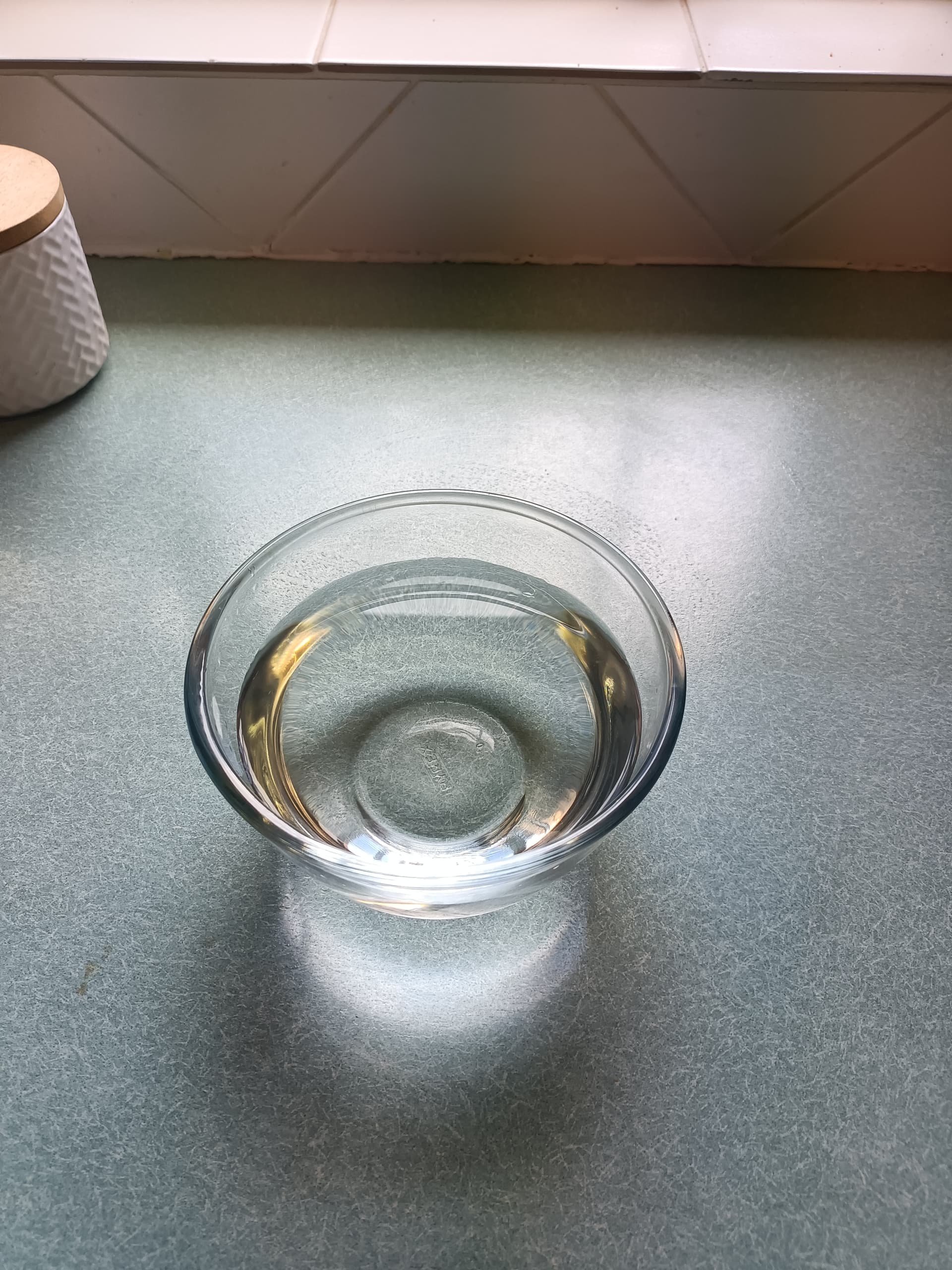
A dish of water.

And also a boiling kettle.

I am expecting any moment for the water on the bench to convert all the visible light into IR heat energy.

Any moment now.

Haven’t been this excited by magic since I waited all night to catch the tooth fairy.

True story.

I remember hiding under the couch to catch the tooth fairy, so it seems sensible that I should put the water outside in the direct sunlight

Alas, the visible light is passing through!

I will try with some water vapour, give me a second…gotta get the kettle…


Hard to see, but the boiling steam is also letting a the light through!

Ok, so to the rules.

If the middle number can do it, then the last number should be allowed to as well.

I never got my 20 cents that night either!

Maybe watching it is the wrong approach!

(All in fun Scout, :rofl:)

To make it fair on all our numbers, we need a fourth position.

A radiation space behind our “earth” zero.

I have long been a proponent of “magic for all, not just the elite”.

So, to be serious for a second, what about H2O in the atmosphere is different to H2O in the water, that our game let’s through energy for on, the atmosphere, but not the second, the ocean?

Fun bit lol :joy: but I’ll clarify

The 30% UV/visible isn’t reflected back purely by the atmosphere- that’s actually the total of all UV/visible light reflected back, including the light which hits the surface of the Earth and doesn’t get absorbed, allowing us to see it. So when we’re talking near 100% conversion of UV/visible to IR, this is accounting for light absorbed by the Earth and not for all the light we can see- which is the light that lets us see the Earth from the moon (sorry to rain on your water-watching parade lol)

Eventually, the energy radiates back out of the water. Otherwise the temperature of the water would just increase forever. So for the sake of simplicity of our math example, we assume all the radiation happens at the same time (which is fine because functionally, it doesn’t make a difference whether it radiates immediately or over some timespan).

I’m confused by what you mean here, could you clarify?

I mean, the atmosphere can’t treat energy in whatever form differently based on direction.

So, whatever it does to UV light, it does in all directions.

Whatever it does to Visible light, it does in a directions.

Whatever it does to IR light, it does in all directions.

In short, energy is neither created or destroyed. Further, energy will move towards entropy.

Granted, we can introduce"pass through rules " but, we must be fair with them.

If we give the matter in the atmosphere a “pass through rule” we have to give the matter in the earth a "pass through rule ".

Having the same matter “convert all visible light to IR” when in the same instant we let it reflect 30% and pass through 70% is breaking mathematics.

Like saying"this is a special number “7” when adding it to other numbers, we first subtract 5".

All other 7s are equal though. Just not this 7. It’s special.

To make it a little bit more absurd:

The molecules of water, fractions a a millimetre from the surface of the ocean from which they evaporated, are now passing visible light through, yet the same molecule, fractions of a second earlier, “convert all visible light to IR”.

It’s literally the same molecule.

So, we are forced by both logic and experience, to treat matter the same.

So, back to the 1D example, all the energy from the left must interact “fairly” with everything it encounters as it passes to the right.

I’m still not clear on what you’re saying, could you point to a specific place on the model I laid out and explain where you think the issue is to help me understand?

Here. In the first line.

Your equation “reflects” energy back.

In this line, the same energy you reflect back in the first line is now “converted to infrared and radiated”.

So the question stands, how does the exact same material in your first line (H2O) reflect UV/Visible light, yet in the other line the exact same material (H2O) "convert UV/Visible light to infrared?

It’s both H2O.

You can boil the kettle, and while I recommend not touching the boiling water or fresh steam, you will find they both are extremely hot.

The steam didn’t magically and instantly lose its heat it just received from the infrared kettle element.

Yet, in your model, line one, UV/Visible light reflects in the atmosphere, but not on the earth.

Though you explained later that was the “total” reflection of the whole system.

Then it’s still a simple 1D equation.

All UV/Visible light is ignored. Or, all UV/Visible light is absorbed. Or what percentage you choose.

That’s the point. Clearer now hopefully.

To make it even clearer, let’s deal just with the UV/Visible light in your equation. We will call it “light” for simplicity.

light. reflect system
100. 0 (0. 0. 0. 0)

  1. 30.          70(0. 0. 0. 0.)
    

This last line is were the math breaks. Where does the 70 go?

You explained that it looks like this, but the 70 changes from visible light to IR…how did it get through the middle zero? The greenhouse effect is primarily all about water vapour, and the earth’s surface is primarily water.

Where do I put the 70?

To be fair to all H20 molecules everywhere, the equation should do this;

70(0. 35, 0, 35). If we set the absorption value of the middle zero to 50%

Is it clear that water is matter and will behave the same? We have to give the water in the atmosphere the same value as the water on the planet, adjusted for density of course!

In reality it may look something more like this

(0. 2. 0. 68).

Given the density difference of gas vs liquid.

However, we can’t treat the molecules differently, at a molecular level.

A photon will hit a molecule of H2O in the atmosphere, and a molecule of H2O in the ocean.

Both molecules will reflect, absorb and radiate the same.
The only difference will be the density.

1 photon visible light only hits 1 molecule H20 = ?

What value are we giving this event?

1 photon Infrared only hit 1 molecule H2O = ?

What value are we giving this event?

Ah yea okay so atmospheric water vapor/surface bodies of water on Earth actually function the same in terms of reflection - they reflect 5-10% of visible light/UV. We also lumped together water vapor and clouds, but clouds have a different structure which is highly reflective (which is why they’re white) which can reflect up to 80% of visible light/UV.

The water vapor in the atmosphere does indeed also absorb some visible light/UV which it then radiates as infrared. However because the vapor is gaseous and far less dense than water, the UV/visible absorbed by atmospheric water vapor is nominal.

So water isn’t behaving any differently on the surface vs in the atmosphere in terms of its reflective/absorptive properties; what’s different is its state of matter, which consequently impacts reflection and how much light it’s able to absorb.

In the model I gave, we simplified all this and said on average 30% of visible light/UV is reflected from both the atmosphere and the surface. In reality, this varies day-by-day. Some small percentage of the UV/visible light heading towards Earth would also be absorbed by water vapor in the atmosphere and radiated to Earth/back into space as IR.

Considering that even on cloudy days there’s still plenty of UV/visible reaching the surface, we should find that if we run this model again we’ll still see that increasing the IR retention of the atmosphere increases the warmth reflected back to Earth, but I’m too tired to run that tonight to prove it. Maybe I’ll build a spreadsheet at some point to automate this for us to play around with sometime soon, writing it out manually is hard to read and tedious.

No magical thinking required so far though!

I found this highly relevant, it speaks to the general state of climate science and how climate science news is reported in the media

1 Like